

Lund – 13 May 2026
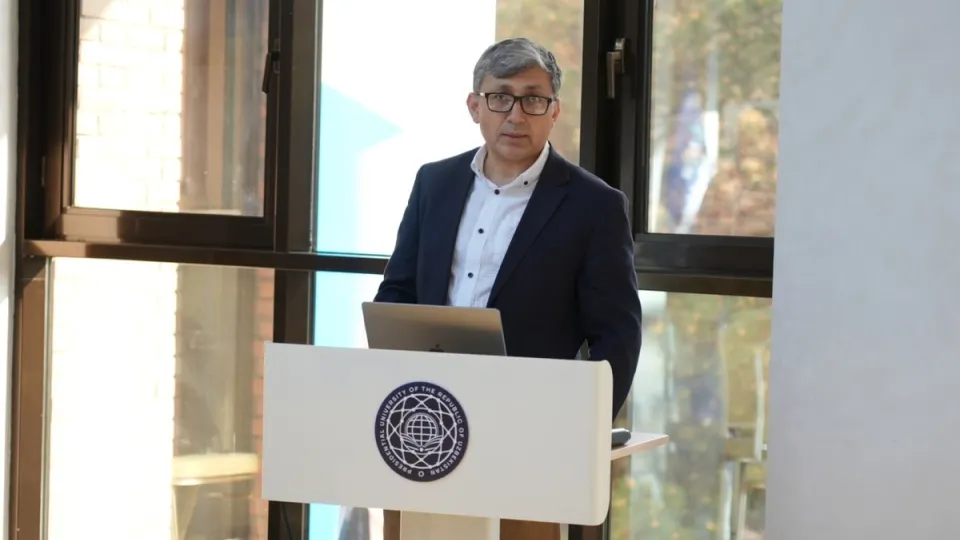
Research findings from the MOCCA project have reached a broad public audience through a major interview published in Gazeta.uz, one of Uzbekistan’s leading independent online media outlets. On 9 May 2026, the outlet published an in-depth interview with Kobil Ruziev, Associate Professor at the University of the West of England (UWE Bristol), examining systemic challenges within Uzbekistan’s doctoral education system, including bureaucratic overload, misaligned incentives, and the persistence of informal practices that undermine research quality.
Research Presentations
Dr. Kobil Ruziev shared findings from his co-authored study, “Reforming Doctoral Education in Uzbekistan: Models, Rules and Norms of Behavior,” published in the academic journal Higher Education Policy. The interview, conducted by Gazeta.uz columnist Komil Jalilov, provided a platform for translating these scholarly findings into a widely accessible format for Uzbek policymakers, academics, and the broader public.
Drawing on a comparative analysis of the UK and Uzbek doctoral systems, Ruziev highlighted the distinction between “soft” and “hard” capacity development, with the former encompassing research skills and critical thinking, and the latter referring to material conditions such as workspace, library access, and internet connectivity. He argued that the Uzbek system systematically fails to support either dimension, creating conditions in which shortcuts and informal practices become rational responses to institutional barriers.
The research underscores a broader structural problem rooted in the Soviet legacy of institutional distrust. Dr. Ruziev identified approximately 13 procedural stages required before a doctoral candidate may defend a dissertation in Uzbekistan — a level of bureaucratic control that, he argued, reflects inherited suspicion toward individual agency rather than a genuine commitment to research quality. Referring to Nobel laureate Douglass North’s work on institutional incentives, Dr. Ruziev explained that when systems reward procedural compliance over genuine scholarly achievement, individuals predictably invest in gaming the system rather than developing research competence.
Discussion Highlights
The interview addressed several interconnected themes directly relevant to MOCCA’s research mandate on corruption in Central Asia:
- The “illusion of potential”: Dr. Ruziev described how formal academic credentials, including PhD and DSc degrees, have been devalued through widespread ghostwriting and degree-for-pay practices, thereby eroding the meritocratic function that academic titles are intended to serve.
- Bureaucracy as a driver of corruption: Drawing on institutional economics, the interview highlighted how excessive formal barriers generate predictable demand for informal workarounds, with direct implications for academic integrity and governance.
- Decentralisation and trust-building: Dr. Ruziev argued that meaningful reform requires building norms of trust and academic honesty from the bottom up. He warned that removing central oversight bodies, such as the Higher Attestation Commission (VAK), without first strengthening institutional ethics could accelerate a race to the bottom.
- The role of power in academia: Using allegory, Dr. Ruziev illustrated how hierarchical power relations can distort peer review and scholarly critique — a dynamic that becomes particularly acute when senior officials pursue academic credentials within systems they themselves oversee.
Project Context and Research Impact
The Multilevel Orders of Corruption in Central Asia (MOCCA) project is a four-year research and staff exchange programme funded by the European Commission under the HORIZON-MSCA-2021-SE-01-01 framework (Project No. 101085855, 2023–2026) and coordinated by Lund University. MOCCA brings together European and Central Asian universities, along with non-academic partners, to advance interdisciplinary understanding of corruption across Central Asia.
The Gazeta.uz interview represents a significant dissemination milestone for MOCCA, bringing research-based insights on institutional corruption, informal practices, and governance reform to an estimated readership of hundreds of thousands in Uzbekistan and among the Uzbek-speaking diaspora. By connecting doctoral education reform to broader debates on institutional trust, corruption incentives, and the rule of law, the interview directly reflects MOCCA’s mission to translate academic research into policy-relevant knowledge for diverse stakeholders, including civil society, policymakers, academics, and the wider public.
The link to the academic article: https://link.springer.com/article/10.1057/s41307-025-00396-1